 Averse Studio
How to Make AI Micro Dramas in Claude (Step-by-Step, Every Prompt Included)
A vertical drama episode with the same faces in every shot, real dialogue, captions and a cliffhanger, from one chat.
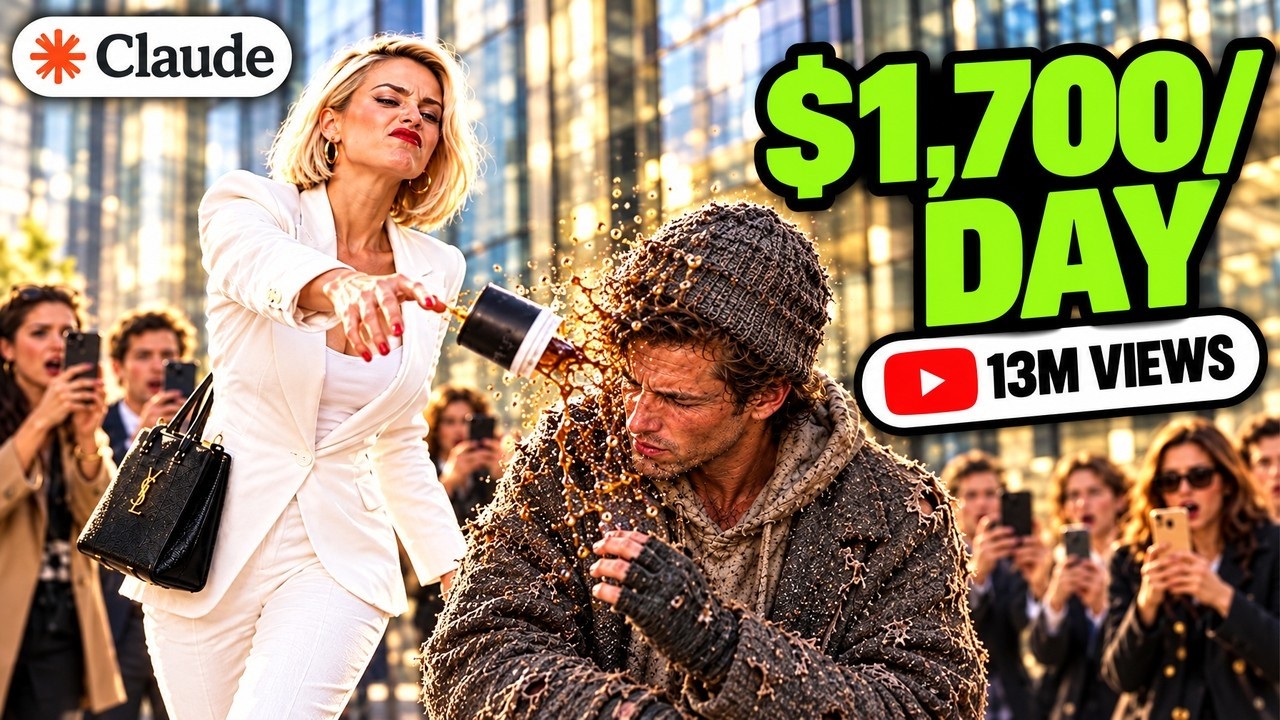
What are AI micro dramas?
Micro dramas are soap operas built for your phone: vertical, one to two minutes an episode, captions on, and every episode ends on a cliffhanger. Apps like ReelShort and DramaBox sell them episode by episode. On YouTube, channels join the episodes into one Full Movie. Axis Studio has eighteen videos and almost fifty thousand subscribers, and one of those videos has 3.7 million views.
The genre is made for AI: it's mostly close-ups of faces and people talking, in a few rooms, with the same three or four characters. No car chases, no crowds, no explosions. And the short-drama apps advertise these on TikTok all day, so the audience already knows the format.
How much can an AI drama make?
From Fat Bride to Mafia Queen, an AI drama by DramaMuse, pulled 13.1 million views in one month. A channel like this earns roughly $1.50 to $4 per thousand views, so that one video made somewhere between $20,000 and $52,000 from ads. That's before the ads and sponsorships AI tool companies pay channels like this.
The story engines that keep winning
- Hidden identity: someone powerful pretends to be powerless. Billionaire Grandma Pretends to Be a Poor Widow to Test Her Grandson's Bride: 3.9 million views in nine days.
- The secret billionaire: Her Boss Fired Her, Not Knowing a Secret Billionaire Was in Love with Her: 6 million in two weeks.
- The underdog who rises: the plus-size bride who becomes the Mafia Queen: 13 million.
Every one of them works the same way: someone gets humiliated in public, and the audience can't leave until they see the payback. This article uses the biggest engine, hidden identity.
What you need
Claude and the Averse Studio connector: one link, added once in Claude's connectors, about thirty seconds. Here's the setup.
Step 1: The premise
Open a new chat and type:
Start: AI Micro DramaClaude asks you three things: the setting, the vibe, and how many episodes. Answer them all in one message:
New York, revenge, episode one for now.You get three premises, and each one is already a title. Pick one by its number. If none of them grabs you, don't settle:
Give me three more, darker.Look at the formula in these titles: what she did, then "not knowing" who he really was. She Threw Coffee on a Homeless Man, Not Knowing He Was the New CEO. The premise, the twist and a reason to click, all in one line. Use it for every episode you post.
Step 2: The screenplay
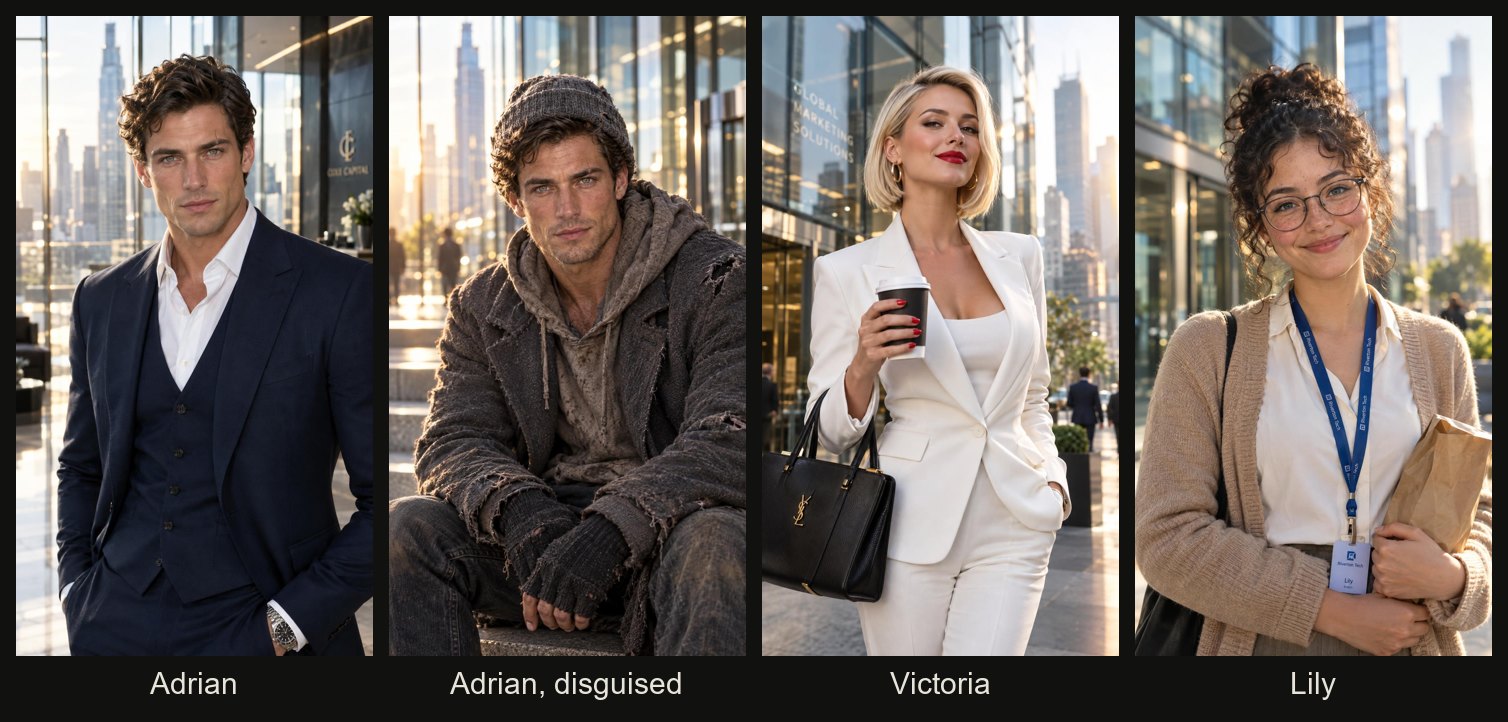
Claude writes the whole episode: who's there, what they do, and every line. Here it's Adrian, the billionaire in disguise; Victoria, who throws the coffee; and Lily, the intern who helps him. Read it like a viewer and check three things:
- Does something physical happen in the first three seconds: a slap, a drink thrown, a cruel line?
- Is there one turn in the middle?
- Does it end on a cliffhanger (a door opening, a phone call, a line cut off halfway) right before anyone reacts?
Good lines are short and don't explain themselves. She throws coffee in his face, and he just looks up and asks: "Is it yours?" One line, and you already know he isn't who she thinks. Then steer it in plain words, one change per message:
Make Victoria crueler.Shorter lines.End on a phone call instead.When you like it:
Lock it.Step 3: The cast
Claude shows you every character before it makes anything else. Change them the same way:
Make Lily younger.Give him a darker coat.For the disguised character, check both looks are the same person: same face, same scar. Once they're right, they stay that way for the whole series, with the same face and voice in every episode.
Step 4: The pictures
Claude plans every scene like a director: who stands where, who walks in from which side, and who's looking at whom. Then, before it makes a single video, it shows you the opening picture of every clip, numbered.
This is the moment to be picky, because changing a picture takes seconds. Point at it by its number:
In picture four, make the phone text bigger.In picture two, she should look scared.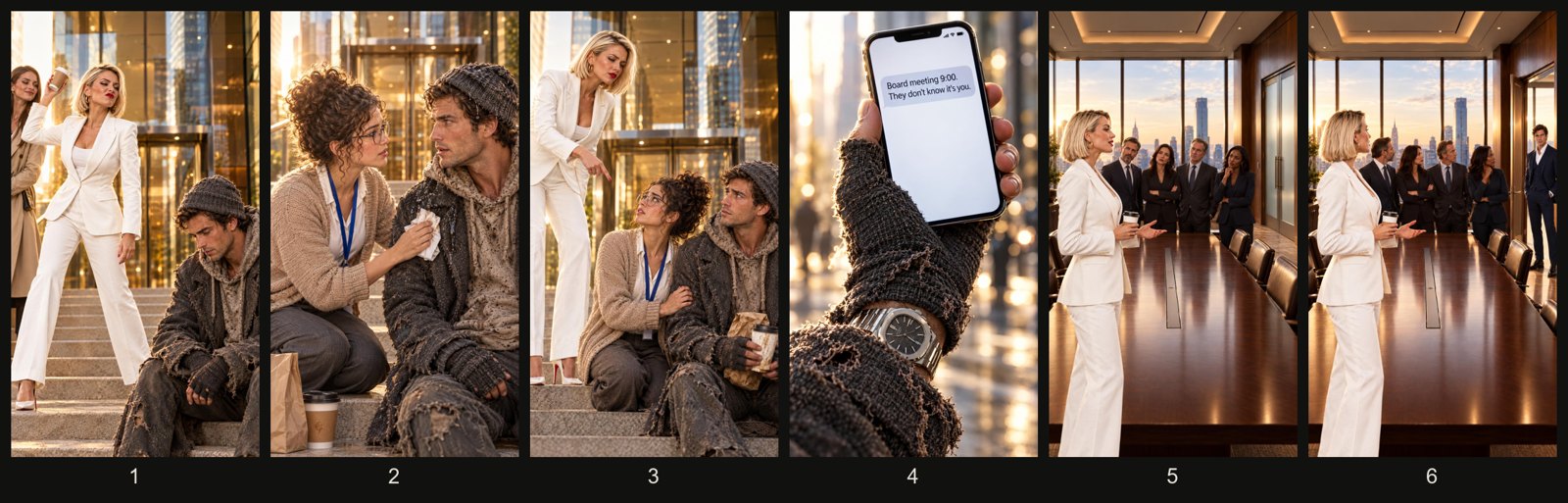
When they're all right:
Looks good, make the episode.Step 5: The episode
Claude makes every clip with the lines spoken and the lips matching, joins them in order, and adds small captions, two words at a time. If one clip isn't right, you don't start over. Ask for that clip by its number:
Redo clip three, she should sound angrier.The finished episode is at the end of this page.
4 prompting habits that make every prompt work better
- Answer Claude's questions in one message. "New York, revenge, episode one."
- Make one change at a time. "Shorter lines."
- Point at things by their number. "In picture four, …"
- Say what to keep. "Keep her face, change the coat."
How to post an AI drama series
This is where most people lose. Post the episode as it is: no intro, no title card. The first frame is the hook.
You don't write any of the text yourself. Ask:
Write my TikTok caption and pinned comment.You get Part 1 plus the title, three hashtags, and a pinned comment: Part 2 tomorrow. It writes for any platform: TikTok, Reels, YouTube, Facebook.
- One episode, one cliffhanger, one day. Don't put the whole story in one post: that's what makes people follow you instead of watching once.
- Same time every day, and put the episodes in a playlist so anyone who finds Part 5 can start at Part 1.
- Answer comments with a hint of what's coming. Every reply is a reason to come back tomorrow.
- On YouTube, post each episode as a Short, and every five to ten episodes join them into a Full Movie with the whole premise as the title. The big channels' Full Movies run an hour or more, and people watch them like a show. That's where the long watch time and the ad money are.
Join episodes one to five into a Full Movie.Then one prompt does the whole upload:
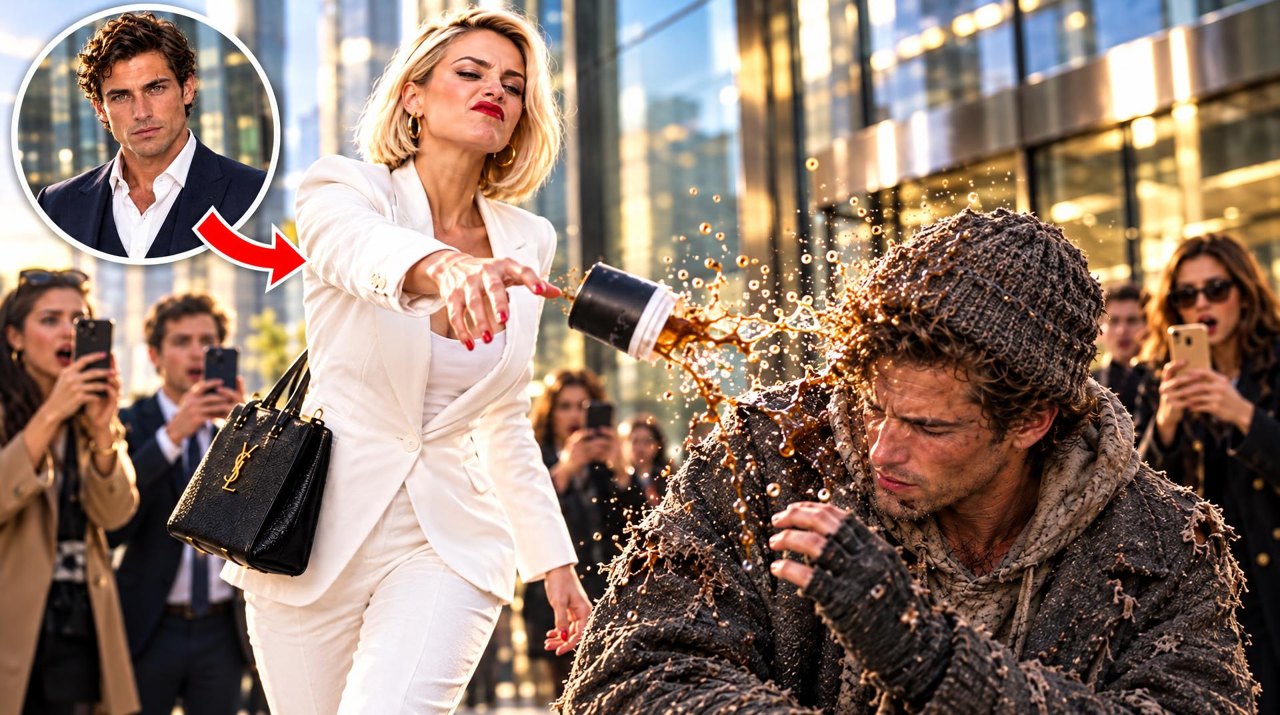
Package the Full Movie.Claude makes the thumbnail right there in the chat (the humiliation moment, with a small circle showing who he really is) and writes the title, the description with chapters, and the tags. Copy, paste, publish. Post the Full Movie on Facebook too: AI movies like this often get their biggest numbers there.
Episode two and beyond
This is how it turns into a channel. Claude already knows the cast, the sets, and where episode one stopped:
Episode two.Or steer it:
Episode two: Victoria tries to get him fired.Same faces, same voices, a new cliffhanger.
What you do
- Pick an engine.
- Use the title formula.
- Read the screenplay like a viewer.
- Be picky with the pictures.
- Post one episode a day, and turn every five into a Full Movie.
Episode 1
Two scenes, three characters, seventy-four seconds, made in one chat:
She Threw Coffee on a Homeless Man, Not Knowing He Was the New CEO · Part 1
Make your own
Everything in this article runs inside Claude with Averse Studio: the characters, the pictures, the episode with real voices, the thumbnail, and every caption and description, all in one chat.
Start: AI Micro DramaFAQ
What is an AI micro drama?
A short vertical drama series, one to two minutes per episode, made with AI: soap-opera stories like a billionaire disguised as a homeless man, with spoken dialogue, captions and a cliffhanger at the end of every episode. Apps like ReelShort and DramaBox sell the same format episode by episode.
Can you make money with AI micro dramas?
Yes. On YouTube the episodes are joined into hour-long Full Movies that earn ad revenue: one drama with 13.1 million views in a month earned roughly $20,000 to $52,000 from ads at a typical $1.50 to $4 per thousand views, before any sponsorships.
How do the characters keep the same face in every shot?
You approve each character once, and the skill keeps that exact look, face and voice for every scene and every episode after it. You also see the opening picture of every clip before any video is made, so you can fix a face or a pose in plain words.
Do I need to edit the video myself?
No. Claude makes the clips with the lines spoken and lip-synced, joins them in order and adds the captions. You get one finished vertical episode, ready to post.
How long does one episode take?
One chat. Most of the time is you reading the screenplay and checking the pictures; the clips themselves take a few minutes.